


 Home
HomeBreaking Traditional Spatial Boundaries with Linear Lighting
 May 08,2026

 SYP
SYP
The Paradigm Shift from Functional Utility to Spatial Architecture
With the emergence of advanced solid-state LED technology, light has transitioned from an applied fixture to an integrated building material. Today, linear lighting stands at the vanguard of this shift. Characterized by continuous, seamless lines of light, it gives designers the power to manipulate spatial perception. No longer confined by physical edges, modern linear illumination weaves through walls and crosses structural planes to effectively dissolve traditional limitations.
Deconstructing the Rigid Envelope of Walls and Ceilings
The traditional room is an envelope of rigid planes. Standard fixtures often draw attention directly to the center of these surfaces, highlighting the enclosure. Linear lighting, conversely, works along the intersections and seams of these planes to break down their perceived boundaries.
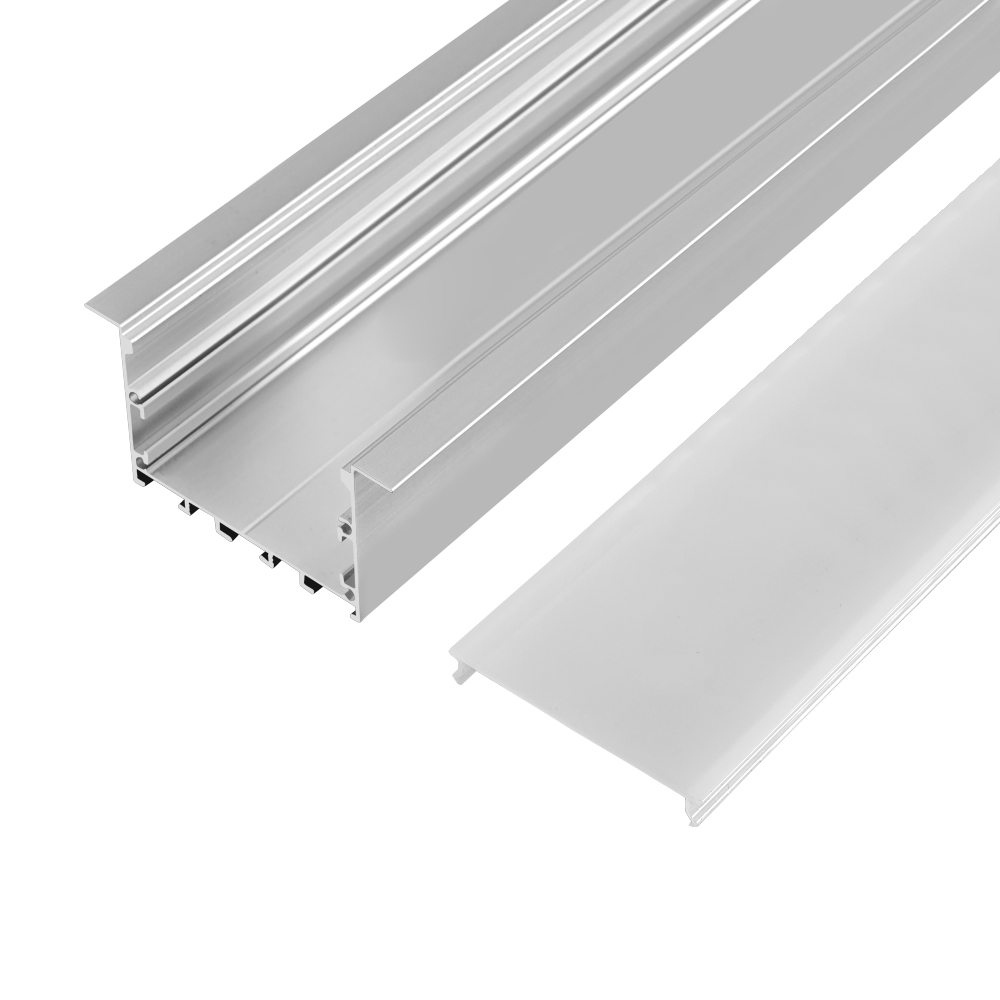
By installing continuous linear profiles across the length of a compressed space, designers capitalize on the human instinct to track lines, stretching the viewer's perspective and creating an illusion of infinity. Furthermore, embedding recessed, diffuse linear fixtures—such as SYP LED’s High-Density Flexible Strips—into wall-wash coves or perimeter slots washes away sharp corners. The soft, ambient glow bounces off adjacent surfaces to eliminate dark boundaries, creating a "floating ceiling" effect where vertical and horizontal planes blend harmoniously.
Achieving Spatial Continuity Between Indoors and Outdoors
One of the most profound applications of linear lighting is its ability to break down the barrier separating indoor spaces from the natural world outside. Traditional lighting setups create a harsh reflectivity on glass windows at night, transforming them into dark, impenetrable mirrors and isolating occupants from the exterior landscape.
Linear lighting solves this spatial disconnect by establishing visual bridges. By running an identical linear fixture continuously from an indoor living area, straight through a glass facade, and out into an outdoor patio ceiling, the physical glass boundary visually disappears. The uninterrupted architectural light path unifies both environments. To achieve this, outdoor segments utilize advanced weatherproofing, such as IP67 or IP68 silicone encapsulation, to perfectly match the color temperature and lumen output of the interior fixtures, pulling the landscape inward.
Creating Non-Physical Zoning in Open-Concept Layouts
Modern layouts heavily favor open-concept architecture to maximize natural light and foster collaboration. However, they present a distinct challenge: how to define specific functional areas, such as dining, lounging, or working zones, without erecting physical partitions that block sightlines and restrict movement.
Linear lighting provides an elegant, non-intrusive solution by acting as a psychological divider. Rather than building a solid drywall partition, a designer can suspend a custom geometric configuration of linear light directly above a specific area. This overhead illumination forms a clear "virtual volume" or zone beneath it. The light establishes a distinct functional destination within a vast space, maintaining total sightline transparency, optimizing floor area, and leaving the layout completely flexible and adaptable.
Designing Without Limits with SYP LED
Linear lighting has permanently shattered the traditional, rigid boundaries of architectural space. By stretching visual perspectives, erasing physical corners, bridging indoor and outdoor environments, and establishing flexible functional zones, it empowers creators to treat space as a fluid, dynamic canvas.
 The Art of Trimless Recessed Lighting
  About us
 OUR PARTNER
 faq
faq Contact us