


 Home
HomeDC Constant Voltage LED Driver for LED Lighting Fixtures
 Jun 16,2026

 SYP
SYP
What is an LED DC Constant Voltage Driver?
Key Technical Specifications & Protective Architectures
Advanced Dimming Interfaces & Control Protocols
Strategic Field Calculations: Sizing and Voltage Drop Management
The SYPLED Supply Chain Advantage for Professionals
In professional solid-state lighting systems, the longevity, stability, and photometric performance of light-emitting diodes (LEDs) depend fundamentally on the quality of their upstream power supply. While raw LED chips require precise current regulation, modern linear lighting arrays, cabinet lighting modules, and tape lights are engineered with onboard current-limiting resistors or integrated circuits designed to operate under a fixed electrical potential. For these systems, specifying a high-performance LED DC Constant Voltage Driver is an absolute technical requirement.
Whether deploying architectural linear fixtures in corporate headquarters or integrating concealed accent lighting within high-end residential cabinetry, understanding the electrical mechanics, safety certifications, and load configurations of direct-current constant-voltage architectures is critical for electrical engineers, contractors, and lighting specifiers. This comprehensive technical guide details the core operational principles, protection mechanisms, and deployment strategies for industrial-grade constant voltage power supplies.
What is an LED DC Constant Voltage Driver?
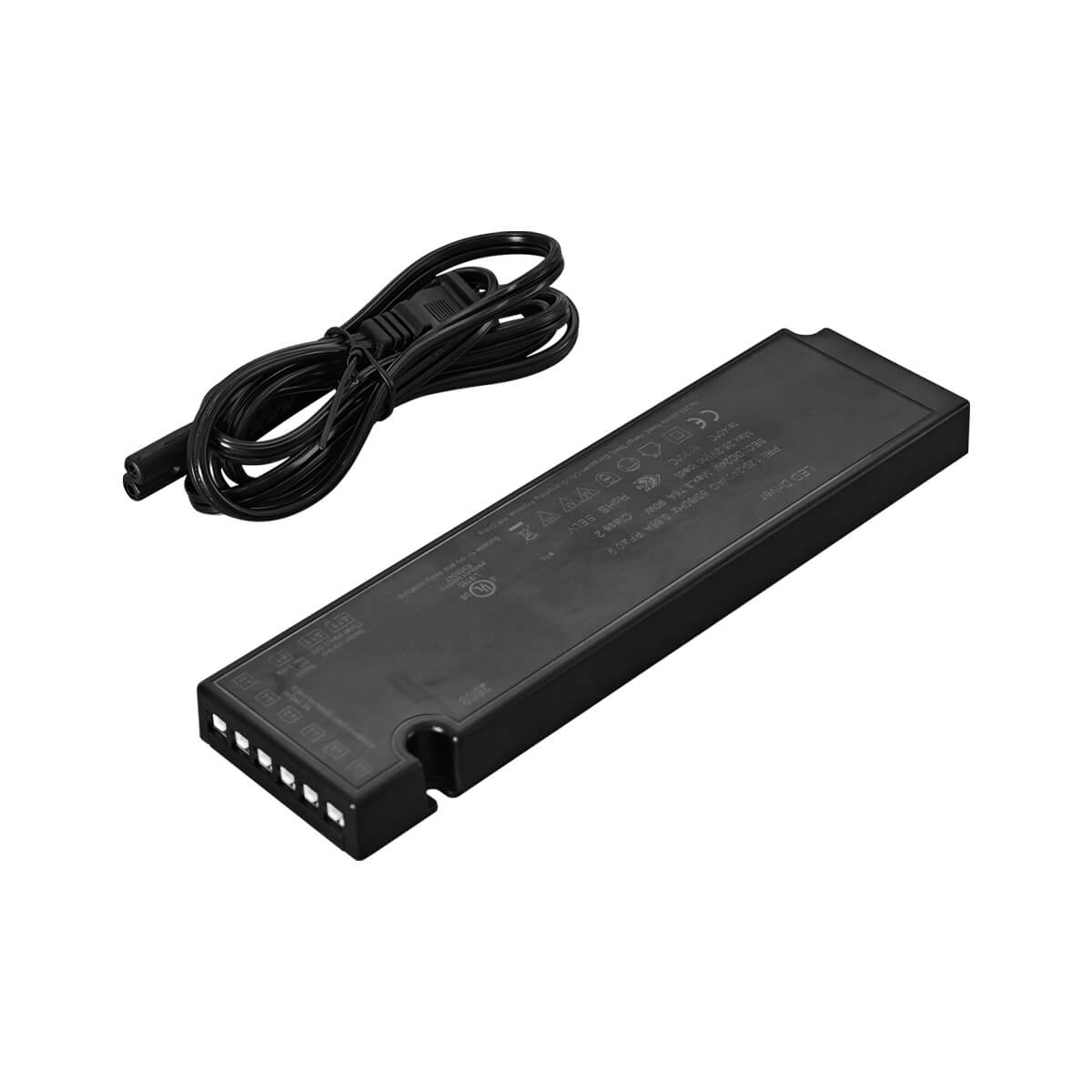
An LED DC Constant Voltage Driver is a specialized switching-mode power supply (SMPS) that converts high-voltage alternating current (AC) from the main grid into a stable, tightly regulated low-voltage direct current (DC) output. Unlike constant current drivers, which fluctuate voltage to maintain a fixed amperage, a constant voltage power supply maintains a rigid, invariant output voltage—typically 12V DC or 24V DC—regardless of changes in the current load, provided the total wattage demand does not exceed the driver’s maximum rated capacity.
The Mechanics of Parallel Circuit Stabilization
In architectural linear applications, LED strips are constructed using parallel-wired groups of diodes. Each group contains a set number of LEDs connected in series with a current-limiting resistor, and these individual blocks are repeated continuously along the circuit board. Because the entire run operates in parallel, every segment requires an identical electrical potential to illuminate uniformly. The LED DC Constant Voltage Driver ensures that whether a contractor connects a one-foot segment or a full sixteen-foot reel, each diode receives the exact design voltage, preventing under-illumination or thermal overstress.
Constant Voltage (CV) vs. Constant Current (CC): An Engineering Comparison
Selecting the incorrect driver topology can lead to immediate component failure or catastrophic thermal runaway. The table below outlines the distinct operational variances between the two primary power architectures:
| Electrical Metric | Constant Voltage (CV) Driver Topology | Constant Current (CC) Driver Topology |
|---|---|---|
| Output Voltage Behavior | Maintains a fixed potential (e.g., stable 12V or 24V DC). | Fluctuates dynamically to compensate for load resistance changes. |
| Output Amperage Behavior | Varies dynamically based on the total load connected to the circuit. | Maintains a strict, unyielding current value (e.g., 350mA, 700mA). |
| Primary Application Type | Parallel circuits: LED strip lights, tape lighting, linear profiles, and cabinet fixtures. | Series circuits: High-power downlights, architectural spotlights, and industrial bay fixtures. |
| Circuit Layout Flexibility | Highly flexible; users can cut or extend parallel loads in the field. | Rigid; total forward voltage of the series chain must match the driver range. |
Key Technical Specifications & Protective Architectures
When reviewing product submittals for commercial or residential project sign-offs, sourcing managers must audit severe electrical parameters. High-quality constant voltage drivers are engineered with layered defense circuits and advanced power componentry to ensure long-term code compliance and stable grid interaction.
1. National Electrical Code Class 2 Compliance
For North American commercial installations, specifying a Class 2 certified LED DC Constant Voltage Driver is critical for reducing inspection barriers and labor costs. Governed by the National Electrical Code (NEC) and regulated under UL 1310 standards, a Class 2 power supply operates within strict safety thresholds: a maximum voltage output of 60V DC and a total power output capped at 100 Volt-Amperes (Watts). Because these drivers inherently limit the risk of electrical shock and electrical fire initiation, electrical codes permit the downstream wiring to be routed without rigid conduits, drastically lowering field installation overheads.
2. Multi-Layer Hardware Protection Circuitry
Industrial-grade drivers must insulate delicate LED loads from grid anomalies and localized load faults. Premium hardware integrates four primary active protection matrices:
- Short-Circuit Protection (SCP): Instantly shuts down the output stage or enters "Hiccup Mode" if a direct short occurs across the output leads, recovering automatically once the fault is cleared.
- Over-Current Protection (OCP): Prevents component degradation by clamping or disconnecting power if downstream current demands exceed 110% to 150% of the driver's maximum threshold.
- Over-Voltage Protection (OVP): Safeguards the linear LED modules from inductive grid spikes by clamping the output rail to a safe maximum limit.
- Over-Temperature Protection (OTP): Utilizes internal thermistors to monitor internal chassis heat, safely dimming or shutting down output power if operating temperatures exceed safe thermal thresholds ($T_c$ points).
3. Power Factor Correction (PFC) & Total Harmonic Distortion (THD)
Large-scale commercial retrofits require power supplies that optimize grid efficiency. Advanced drivers incorporate Active Power Factor Correction (Active PFC), achieving a Power Factor (PF) greater than 0.95. This design alignment minimizes the phase angle distortion between voltage and current waveforms. Concurrently, maintaining a low Total Harmonic Distortion (THD < 15%) prevents harmonic feedback into the local building grid, protecting adjacent sensitive office electronics, computers, and AV systems from electrical noise.
Advanced Dimming Interfaces & Control Protocols
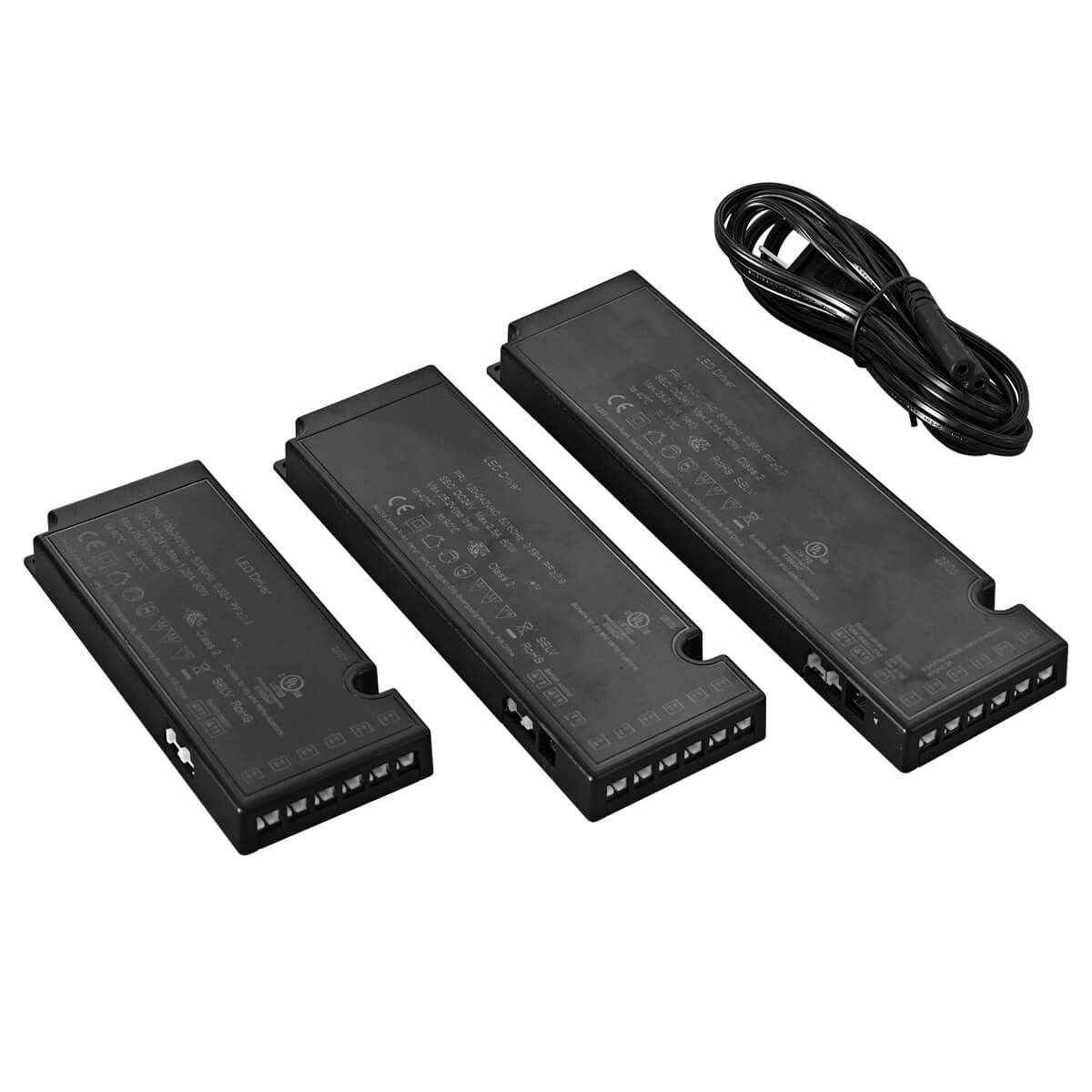
Modern architectural lighting environments demand adaptive lighting control. A professional LED DC Constant Voltage Driver must integrate seamlessly with leading dimming protocols to deliver smooth, flicker-free dimming curves without causing audible buzz or stroboscopic anomalies.
Triac / Phase-Cut Dimming
Widely utilized in residential retrofits and standard electrical switch boxes, forward-phase (leading-edge) and reverse-phase (trailing-edge/ELV) Triac dimming allows the driver to modulate light output based on chopped AC waveforms from standard wall dimmers. High-performance drivers decode these phase changes smoothly down to 1% or 0.1% minimum lux levels.
0-10V & Pulse-Width Modulation (PWM) Coordination
For commercial offices and commercial building automation systems, 0-10V low-voltage analog dimming control is the default engineering preference. The driver interprets an independent 0 to 10-volt signal to adjust output intensity. Internally, the driver translates this analog signal into a high-frequency Pulse-Width Modulation (PWM) duty cycle. By maintaining a high PWM frequency (typically above 20kHz), the system guarantees that any light reduction remains completely invisible to high-speed digital video cameras and human sight lines, preventing ocular fatigue.
Strategic Field Calculations: Sizing and Voltage Drop Management
Field failures of constant-voltage systems are rarely caused by defective diodes; instead, they are usually driven by improper driver sizing or a failure to compute copper track resistance over extended wiring runs.
The 80% De-Rating Mandate
To preserve the internal electrolytic capacitors of an LED DC Constant Voltage Driver operating in high-ambient interior environments, electrical engineers enforce the 80% safety margin rule. A driver should never be loaded continuously to 100% of its placard capacity. For instance, if a design specifies 80 Watts of linear LED tape light, the minimum driver capacity must be calculated as follows:
Required Driver Wattage = 80W / 0.80 = 100 Watts
Specifying a 100W driver ensures the power supply operates well within its thermal stability window, preventing premature component fatigue.
Mitigating Low-Voltage DC Drop
Unlike high-voltage AC current, low-voltage DC (12V or 24V) encounters severe resistance over extended copper conductor lengths. This resistance induces a progressive voltage drop, causing LEDs situated at the far end of a long linear run to appear significantly dimmer than those positioned near the driver source. Specifiers can mitigate this effect through three deliberate engineering interventions:
- Transition to 24V Architectures: Operating at 24V DC halves the current (amperage) required to deliver the same wattage compared to a 12V system, mathematically reducing line voltage drop by 75% over identical wire gauges.
- Upsize Conductor Gauges: Utilizing lower American Wire Gauge (AWG) cables (such as upgrading from 18 AWG to 14 AWG) for supply leads minimizes native line resistance.
- Centralized Star-Wiring: Position the driver centrally and home-run independent, equal-length power legs to distinct zones rather than daisy-chaining multiple fixtures on a single continuous track.
The SYPLED Supply Chain Advantage for Professionals
Engineering robust, flicker-free linear illumination requires a dependable supply chain capable of delivering synchronized hardware solutions. Headquartered in Hayward, California, SYP LED TECH USA INC (SYPLED) operates as a premium North American furniture lighting and home storage solution provider.
We streamline the procurement lifecycle for cabinet makers, commercial contractors, interior architects, builders, and large-scale retailers by providing completely integrated solid-state systems where lighting hardware and architectural structural components match perfectly.
Precision Engineering and OEM/ODM Customization Capabilities
Every commercial blueprint poses distinctive physical layout constraints. SYPLED facilitates precision B2B customization, offering specialized OEM and ODM engineering support. Whether your design profile requires custom-length linear aluminum channels, specific Correlated Color Temperature (CCT) / Color Rendering Index (CRI >90) strip lights, or dedicated LED DC Constant Voltage Drivers configured with explicit dimming compatibility profiles, our California-based engineering division collaborates directly with your team to deliver verified architectural solutions.
Local North American Infrastructure and Compliance Support
Partnering with SYPLED grants North American professionals comprehensive risk mitigation through our localized infrastructure:
- Rapid Logistics Fleet: Avoid extended international freight disruptions with our localized inventory control and expedited domestic shipping out of our Hayward hub.
- On-Demand Technical Consulting: Receive immediate, real-time support from engineering specialists to resolve on-site wiring, voltage drop, or dimmer compatibility bottlenecks.
- Certified Code Compliance: Our constant voltage drivers and integrated LED components undergo rigorous testing, strictly meeting UL and CE safety mandates to protect your projects from regulatory or liability failures.
Procurement Optimization: Ensure your linear installations are backed by code-compliant thermal management and smooth dimming integration. Contact the SYPLED engineering division today to request comprehensive technical files, submittal documentation, sample units, or direct layout consultation.
 LED Backlight Sheet 3 CCT Dimmable 24V 36W
  About us
 OUR PARTNER
 faq
faq Contact us