


 Home
Home12V vs 24V LED Strip Lights for Cabinet Lighting: Which Is Better?
 Aug 11,2026

 SYP
SYP
Choosing between 12V and 24V LED strip lights may seem like a minor technical decision, but voltage affects almost every part of a cabinet lighting system. It influences run length, wiring, voltage drop, driver selection, installation efficiency and the consistency of the finished light.
For a small display cabinet, either voltage may work well. For a custom kitchen, walk-in closet, retail display or multi-cabinet installation, selecting the right voltage at the design stage can prevent dim sections, oversized wiring and unnecessary installation work.
This guide compares 12V and 24V LED strips and explains how cabinet makers, contractors, designers and lighting specifiers can choose the right system for each project.
What Is the Difference Between 12V and 24V LED Strip Lights?
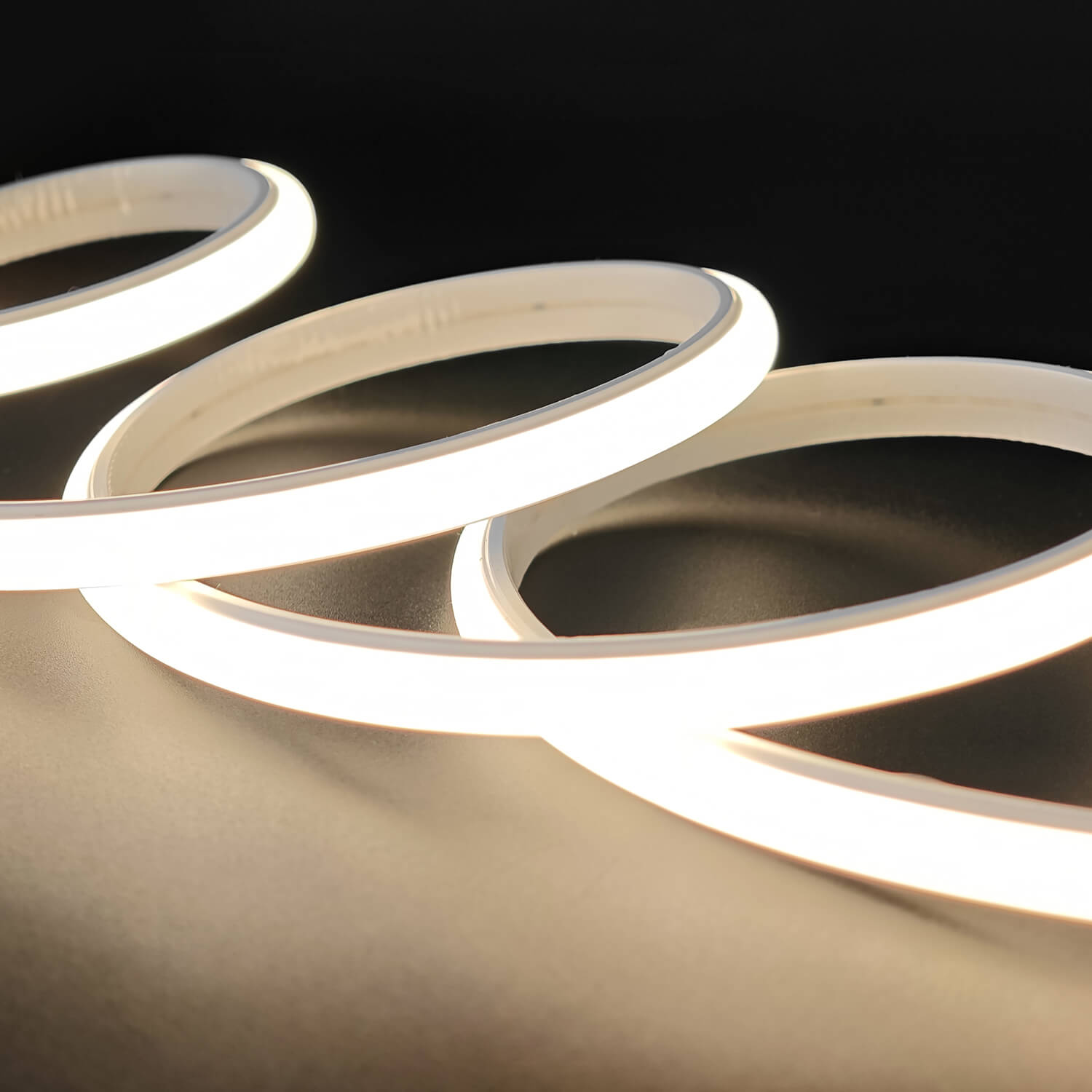
Both products are low-voltage LED lighting systems. A 12V strip must be connected to a compatible 12V DC power supply, while a 24V strip requires a 24V DC power supply. The strip, driver, dimmer, controller and other components must all be electrically compatible.
The most important practical difference is current. For the same wattage, a 24V system draws approximately half the current of a 12V system.
Electrical current = Power ÷ Voltage
For example, a 96-watt lighting load draws approximately:
- 8 amps at 12V
- 4 amps at 24V
Lower current can reduce voltage drop and make longer cable runs easier to manage. This is one of the main reasons 24V LED lighting is frequently specified for professional cabinetry and architectural millwork.
12V vs 24V LED Strip Lights: Quick Comparison
| Feature | 12V LED Strip | 24V LED Strip |
|---|---|---|
| Typical application | Small cabinets and short lighting sections | Kitchens, closets, retail displays and longer installations |
| Current at equal wattage | Higher | Approximately half that of 12V |
| Voltage drop | More noticeable over long runs | Easier to control over longer runs |
| Wiring requirements | May require heavier wire at higher loads | Lower current can simplify power distribution |
| Cutting flexibility | May offer shorter cutting intervals, depending on the strip | Cutting intervals may be longer, depending on the strip |
| Large project suitability | Best for localized lighting | Usually better for multi-cabinet systems |
Note: Exact maximum run lengths, cut points and wattage depend on the individual LED strip. Always check the product specification sheet before finalizing a design.
Why Voltage Drop Matters in Cabinet Lighting
Voltage drop is the gradual reduction in voltage as electricity travels through a wire or LED strip. When the drop becomes significant, the LEDs near the end of the run may appear dimmer than those near the power source. Color temperature can also look less consistent across the installation.
Voltage drop is affected by several factors:
- Total LED strip length
- Wattage per foot or meter
- Wire length and wire gauge
- Number and quality of connectors
- Location of the power supply
- Whether power is supplied from one end, both ends or multiple points
Because a 24V system carries less current for the same power, it generally performs better over longer distances. This can produce more consistent brightness across long shelves, wardrobe sections and continuous under-cabinet installations.
When Should You Choose 12V LED Cabinet Lighting?
A 12V system remains a practical choice for smaller, self-contained lighting applications. It can be especially useful when an existing project already has a compatible 12V power supply or control system.
Consider 12V LED lighting when:
- The illuminated section is short.
- Each cabinet has an independent power feed.
- The project uses existing 12V components.
- Short cutting increments are required and supported by the selected strip.
- The total lighting load is relatively low.
- A 12V puck light or specialty fixture is part of the design.
Typical applications include a single display cabinet, a small vanity, a short drawer light or a compact shelving unit.
A well-designed 12V system can deliver excellent results. Problems usually arise when a short-run system is extended beyond its intended electrical limits without additional power feeds.
When Is 24V LED Cabinet Lighting the Better Choice?
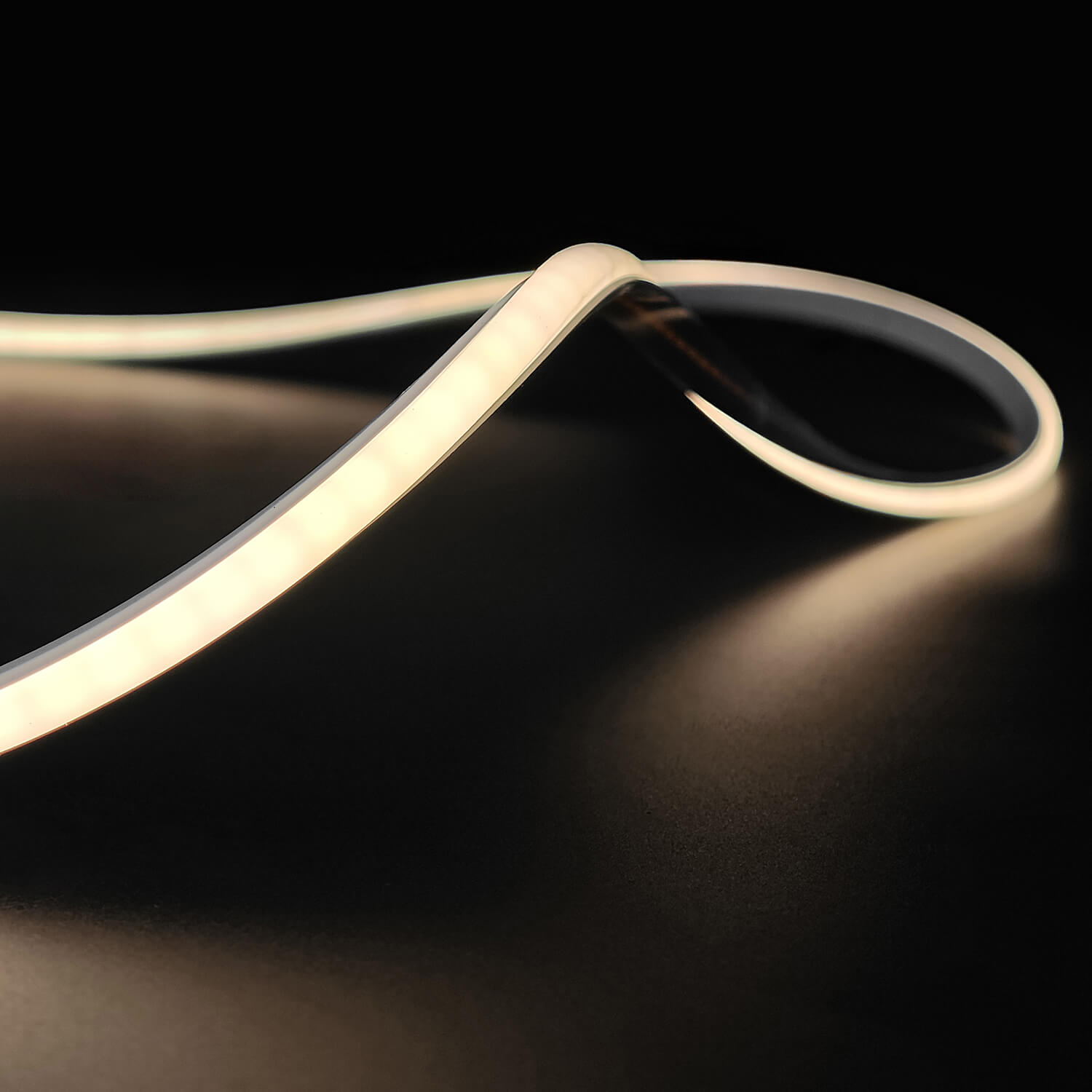
For professional cabinet lighting, 24V is often the more scalable option. Lower current makes it easier to distribute power across multiple cabinets while maintaining consistent output.
Consider 24V LED lighting for:
- Long kitchen cabinet runs
- Walk-in closets and wardrobe systems
- Continuous shelf lighting
- Retail display fixtures
- Showcases and museum-style cabinets
- Commercial millwork
- Projects with centralized power supplies
- High-output linear lighting systems
Many professional cabinet and wardrobe lighting solutions use 24V architecture because it supports longer runs and efficient low-voltage distribution. It is particularly useful when several lighting zones must operate from one properly sized driver.
Does 24V Produce Brighter Light Than 12V?
Not automatically. Voltage alone does not determine brightness.
Brightness depends on the LED package, diode density, wattage, optical design, diffuser and operating current. A high-quality 12V strip can be brighter than a low-output 24V strip. The correct comparison should be based on measurable specifications such as:
- Lumens per foot or meter
- Watts per foot or meter
- LED density
- Color Rendering Index (CRI)
- Color temperature (CCT)
- Beam angle and diffuser transmission
The main advantage of 24V is not inherently greater brightness. It is the ability to maintain more consistent electrical performance across longer runs.
How to Choose the Right LED Strip for Cabinets
1. Determine the Lighting Purpose
Start by deciding whether the light will be used for task lighting, accent lighting or product display.
- Task lighting: Requires sufficient, evenly distributed output for countertops and work surfaces.
- Accent lighting: Uses lower or dimmable output to add depth and atmosphere.
- Display lighting: Requires controlled glare and accurate color rendering.
- Closet lighting: Benefits from sensors, high CRI and concealed linear profiles.
2. Calculate the Total Wattage
Multiply the strip wattage per foot or meter by the total installed length.
Total lighting wattage = Strip wattage per unit length × Total length
If a strip consumes 4 watts per foot and the project requires 20 feet, the connected lighting load is 80 watts. The power supply should be selected according to the manufacturer's loading guidelines, with appropriate capacity for reliable operation.
3. Select the Correct Driver
A constant-voltage LED strip requires a compatible constant-voltage driver. Never connect a 12V strip to a 24V driver, as the excessive voltage can damage the LEDs. A 24V strip connected to a 12V driver may fail to illuminate correctly.
When dimming is required, confirm that the driver, controller and dimming method are compatible. Depending on the project, options may include low-voltage PWM control, 0-10V control, phase-cut dimming or wireless control.
Explore compatible LED drivers and controls before completing the wiring design.
4. Check CRI and Color Temperature
For cabinetry and display lighting, light quality is just as important as brightness. A high CRI helps wood finishes, clothing, food, stone and merchandise appear more natural.
Common color-temperature choices include:
- 2700K: Warm and decorative; well suited to traditional interiors.
- 3000K: Warm white for residential kitchens, closets and hospitality spaces.
- 4000K: Neutral white for task lighting and contemporary commercial interiors.
- 5000K and above: Cooler appearance for selected retail or utility applications.
For a cohesive result, coordinate the cabinet lighting color temperature with the room's ceiling fixtures, decorative lighting and surrounding materials.
5. Decide Between SMD and COB LED Strips
Traditional SMD strips place individual LED packages at regular intervals. If diode spacing is visible through the diffuser, the installation may show bright dots or hot spots.
COB technology uses a high density of light-emitting chips to create a more continuous line of light. This makes COB LED strips especially useful in shallow aluminum profiles, reflective cabinets, glass shelves and premium display applications where a smooth, dot-free appearance is important.
6. Choose the Right Aluminum Profile
An aluminum profile protects the strip, supports heat management and gives the installation a clean architectural finish. Available configurations may include:
- Surface-mounted profiles
- Recessed or flush-mounted profiles
- Corner and angled profiles
- Suspended linear profiles
- Solder-free cabinet lighting profiles
The profile should fit both the LED strip width and the cabinet construction detail. The diffuser depth and LED density should also be considered together to avoid visible spotting.
Professional Wiring Tips for 12V and 24V Systems
A professional result depends on more than choosing the correct voltage. Use these planning practices to improve reliability and serviceability:
- Wire long cabinet sections in parallel. Avoid connecting multiple long strips end to end when this exceeds the strip's rated run length.
- Keep drivers accessible. Do not permanently bury a power supply behind finished cabinetry or drywall.
- Use the correct wire gauge. Longer distances and higher currents may require larger conductors.
- Reduce unnecessary cable length. Position drivers and distribution points strategically.
- Test before final installation. Operate the complete system before installing diffusers or closing cabinet panels.
- Label lighting zones. This simplifies commissioning, maintenance and future replacement.
- Check polarity. Constant-voltage DC LED systems require correct positive and negative connections.
Electrical connections and mains-voltage work should follow applicable local codes and be completed by a qualified professional when required.
Which Voltage Is Best for Cabinet Makers and Contractors?
For a single short cabinet, 12V can be simple and effective. For larger kitchens, custom closets, retail millwork and multi-zone installations, 24V is generally easier to scale and manage.
The decision can be summarized as follows:
- Choose 12V for compact, low-load and independently powered applications.
- Choose 24V for longer runs, centralized drivers and professional multi-cabinet systems.
Voltage should never be selected in isolation. The best system combines the correct strip, driver, wire, profile, diffuser, sensor and control method.
Frequently Asked Questions
Can I connect a 12V LED strip to a 24V power supply?
No. A 24V power supply can overdrive and permanently damage a 12V LED strip. Always match the strip voltage to the output voltage of the power supply.
Can 12V and 24V LED lights be used in the same project?
Yes, but they must use separate compatible power supplies or properly engineered voltage conversion. Combining both voltages generally adds complexity, so a single system voltage is preferable when possible.
Is 24V LED lighting safer than 12V?
Both are low-voltage systems when correctly designed and installed. Safety depends on compatible components, proper wiring, suitable enclosures and compliance with local electrical requirements.
How long can a 24V LED strip run from one power feed?
There is no universal maximum. The permitted length depends on strip wattage, circuit design, copper thickness and manufacturer specifications. For long installations, parallel wiring or additional power injection may be required.
Are 24V LED strips more energy efficient?
Two strips with the same LED efficiency and wattage use approximately the same amount of energy. However, a 24V distribution system can reduce current-related losses and voltage drop in larger installations.
Should cabinet lights be installed before or after the cabinets?
Lighting should be planned before cabinet manufacturing or installation whenever possible. Early coordination allows channels, cable routes, sensors and driver locations to be integrated cleanly into the millwork.
Plan Your Cabinet Lighting System with SYPLED
SYPLED provides furniture lighting and integrated storage lighting solutions for cabinet makers, contractors, designers, builders, retailers and distributors. Available options include cabinet lights, closet lighting, shelf lighting, display lighting, COB strips, aluminum profiles, drivers and lighting controls.
Systems can be configured around project requirements such as length, color temperature, brightness, wattage, finish, mounting method and driver specification.
 Flexible LED Backlight Sheets: A Complete Guide for Stone, Signage and Display Lighting
  About us
 OUR PARTNER
 faq
faq Contact us