


 Home
HomeCommercial-Grade LED Under-Cabinet Lighting: The Ultimate Guide to Enhancing Task Visibility and Workspace Esthetics
 Jun 05,2026

 SYP
SYP
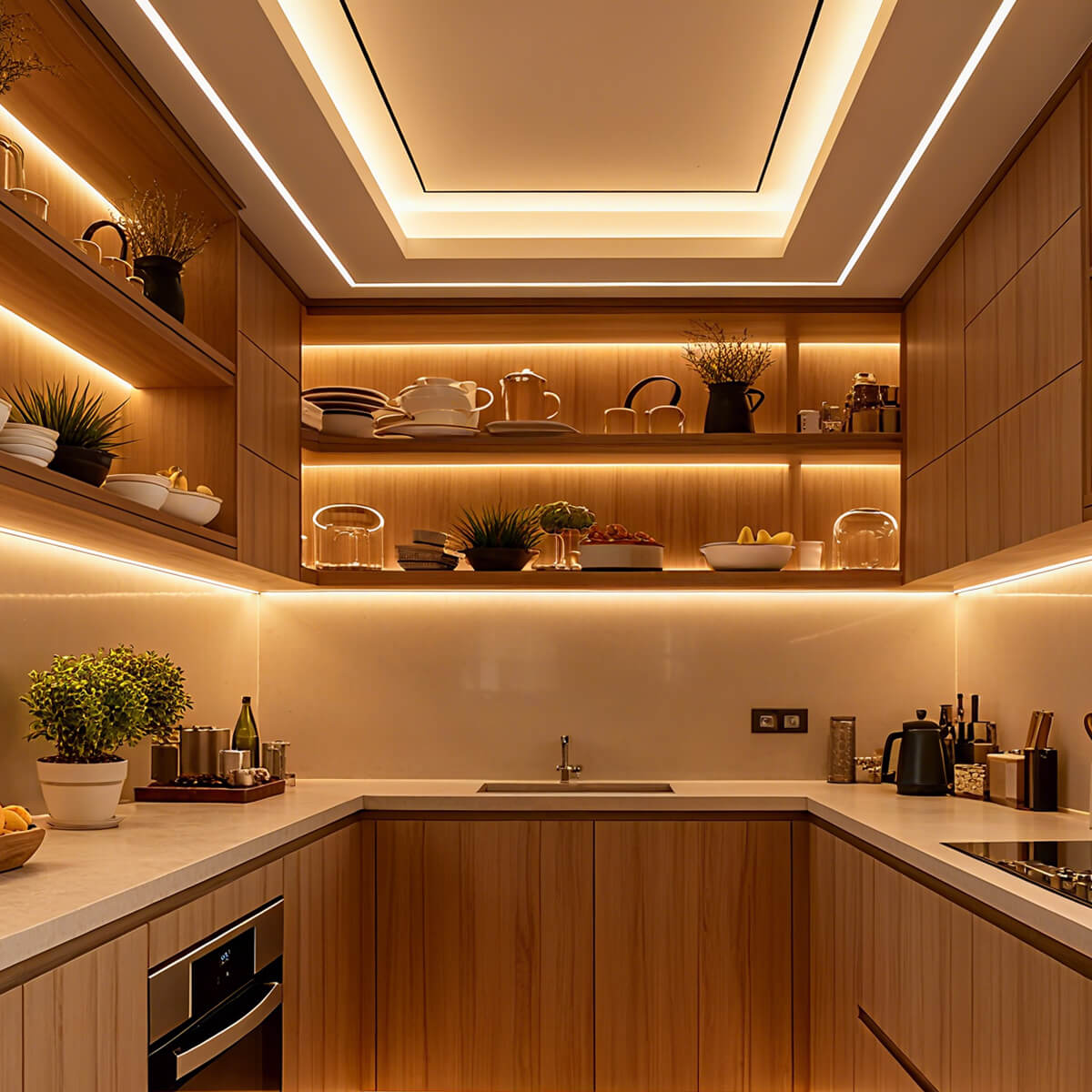
Optimizing task-level illumination remains a critical yet frequently overlooked element in modern architectural, residential, and commercial interior design. Insufficient ambient lighting often leaves key culinary and workspaces cloaked in shadows, compromising both operational safety and overall visual appeal.
Integrating specialized LED under-cabinet fixtures delivers focused, high-rendering illumination precisely where it is required, eliminating glare from overhead fixtures while elevating the space with a premium, high-end ambiance.
Multi-Scenario Functional Applications:
Commercial & Residential Kitchens: Eliminates blind spots on countertops, rendering food preparation safer and transforming the kitchen into a high-visibility culinary hub.
Industrial Workstations & Offices: Mitigates ocular fatigue, sharpens focus, and boosts overall task efficiency.
Retail Display Cases & Garages: Highlights intricate product details, maximizes architectural depth, and enhances practical utility.
Technical Comparison: Next-Gen LEDs vs. Legacy Lighting
For decades, fluorescent and halogen systems were the default industry choices, despite severe operational drawbacks. Modern LED technology has fundamentally reshaped performance standards across all critical metrics.
Performance Metric | Legacy Halogen / Fluorescent | Solid-State LED Technology |
7 Core Commercial Advantages of Integrating LED Under-Cabinet Systems
1. Significant Energy Cost Mitigation
Unlike obsolete incandescent bulbs that convert the majority of power into ambient heat, solid-state LED fixtures reduce electricity consumption by up to **75%**. This transition substantially lowers monthly utility overheads without sacrificing lumen output or lux density.
2. Decadal Operational Lifespan
Traditional bulb replacement protocols incur repetitive labor and material costs. Engineering-grade LED under-cabinet luminaires boast an operational rating of **50,000 hours or longer**, translating to over a decade of reliable, continuous service.
3. Flicker-Free, Instant-On Illumination
Legacy lighting often suffers from distracting ballast flicker or prolonged ignition delays. Modern LED linear strips deliver immediate, full-brightness illumination the exact millisecond power is supplied, ensuring a stable visual environment.
4. Advanced Thermal Management and Safety
Halogen variants present a tangible burn risk and can degrade sensitive cabinet finishes due to high heat emission. LEDs operate at minimal thermal thresholds, ensuring they remain entirely safe to the touch—a critical safety standard for tight kitchen installations.
5. Versatile Installation Architecture
To accommodate diverse structural and project blueprints, high-quality LED under-cabinet systems support multiple power and mounting configurations:
Hardwired Systems:** Ideal for seamless, permanent commercial integrations and new constructions.
Plug-In Modules:** Designed for rapid deployment with existing electrical outlets.
Battery-Powered / Wireless Units:** The optimal, zero-wiring solution for retrofitting properties or temporary retail displays.
6. Architectural Aesthetics & Lux Optimization
Eliminating dark corners instantly broadens the perceived volume of a space. Strategic under-cabinet positioning accentuates premium countertop materials (such as marble, quartz, or stainless steel) and lends a sleek, high-end aesthetic to any layout.
7. Intelligent Control & Smart Home Synergy
Premium LED solutions offer seamless compatibility with advanced digital protocols, supporting **triac dimming, CCT (Correlated Color Temperature) tuning**, and smart ecosystem integration via mobile applications or voice-activated automation.
Categorization: Selecting the Right LED Fixture Architecture
Achieving the target photometric distribution depends heavily on selecting the appropriate physical form factor. Below is the technical breakdown of the three primary product categories.
1. Flexible LED Strip Lights
Supplied on continuous reels with robust adhesive backing, these flexible circuits can be cut to precise increments, making them highly adaptable to irregular geometric layouts.
Optimal Deployment: Seamless linear integration, custom DIY cabinetry, and minimalist modern layouts.
Key Benefits: Exceptional architectural flexibility, customizable run lengths, and multiple CCT/RGB variations.
Technical Constraints: Adhesive backing may degrade over time in high-humidity zones; premium high-output models require dedicated external drivers.
2. LED Puck Lights
Engineered to project focused, directional beams of light rather than a continuous linear wash, these compact, low-profile fixtures create striking visual contrast.
Optimal Deployment: Accentuation of specific focal points, high-end display cases, and localized countertop task areas.
Key Benefits: Low-profile footprint, localized beam control, and rapid surface or recessed mounting.
Technical Constraints: Improper spacing or positioning can result in distinct scalloped shadows or uneven light distribution.
3. Rigid LED Linear & Bar Fixtures
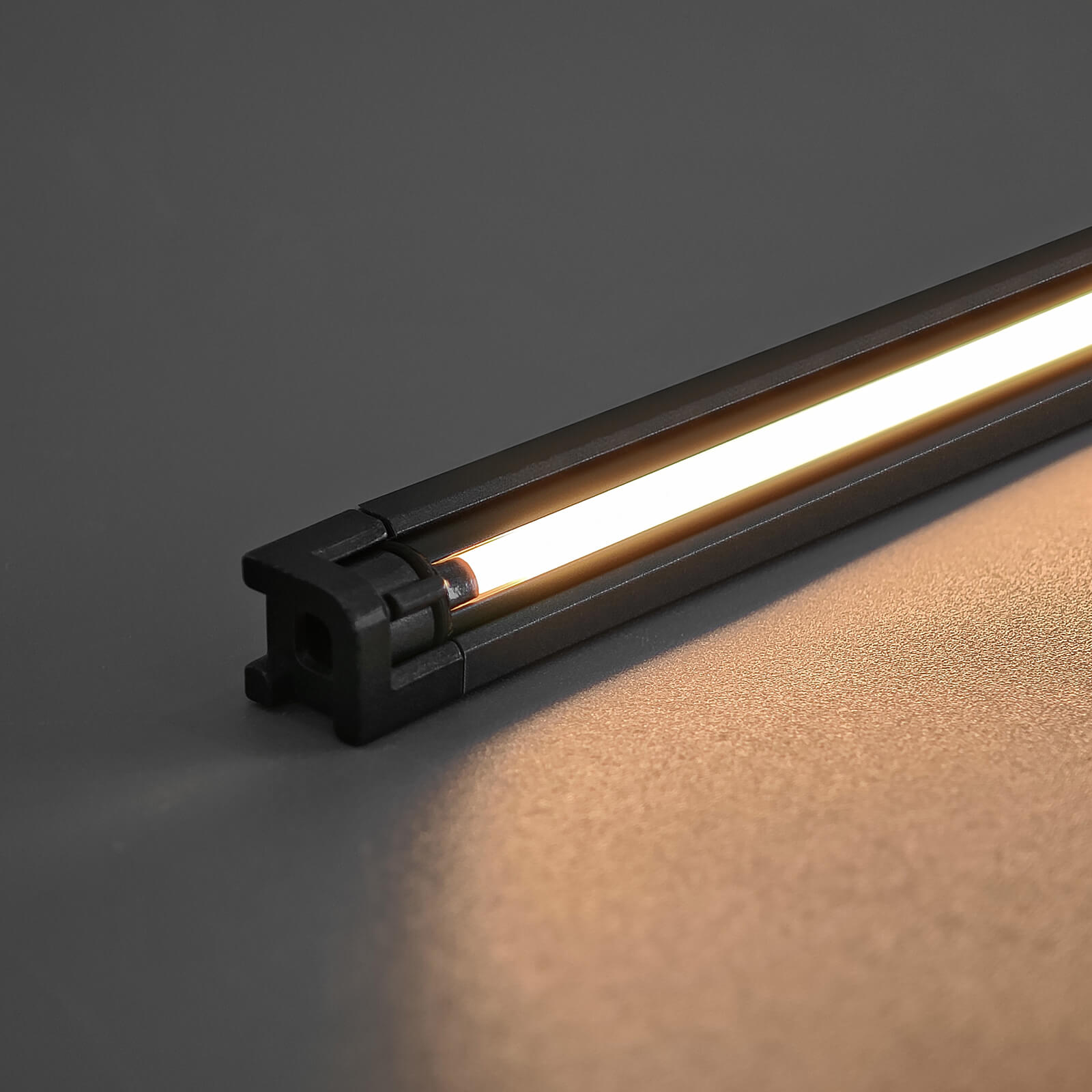
Enclosed in durable aluminum extrusions with integrated diffusers, linear bar fixtures deliver high-lumen, uniform light distribution across wide surfaces without any visible hot-spots.
Optimal Deployment: Heavy-duty task illumination, high-demand commercial workspaces, and professional kitchen environments.
Key Benefits: Highly uniform light dispersion, robust physical protection, and structural durability.
Technical Constraints: Rigid chassis structure lacks the flexibility of strip lights and typically requires mechanical mounting brackets.
Professional Buyers Procurement Checklist
Specifying the perfect under-cabinet LED installation involves analyzing variables far beyond basic aesthetics. Engineers, sourcing managers, and interior designers must audit precise parameters—including Target Lumen Output, Color Rendering Index (CRI >90), and Correlated Color Temperature (CCT)—to match the specific environmental requirements of a kitchen, office, or industrial space.
 How to match LED Cabinet Underlighting Systems to Specific Environments
  About us
 OUR PARTNER
 faq
faq Contact us