


 Home
HomeHow to match LED Cabinet Underlighting Systems to Specific Environments
 Jun 05,2026

 SYP
SYP
Achieving optimal photometric performance requires selecting fixtures based on the specific functional demands of the environment. Different spaces dictate distinct requirements for lumen output per linear foot, Correlated Color Temperature (CCT), and electrical integration.
1. Culinary & Kitchen Environments: High-Visibility Task Lighting
Kitchen illumination demands a strategic balance between robust operational functionality and refined visual design. The primary engineering goal is the total elimination of shadowed blind spots on counter surfaces while accentuating premium architectural finishes.
Optimal Configuration: Hardwired LED integrations are highly recommended to achieve a seamless, low-profile, and permanent architectural finish.
Target Luminance Volume: 300 to 500 Lumens per foot, ensuring sufficient lux levels for precise and safe food preparation.
Correlated Color Temperature (CCT): 3500K to 4000K (Neutral White). This spectrum mimics natural daylight, preserving accurate color rendering of ingredients.
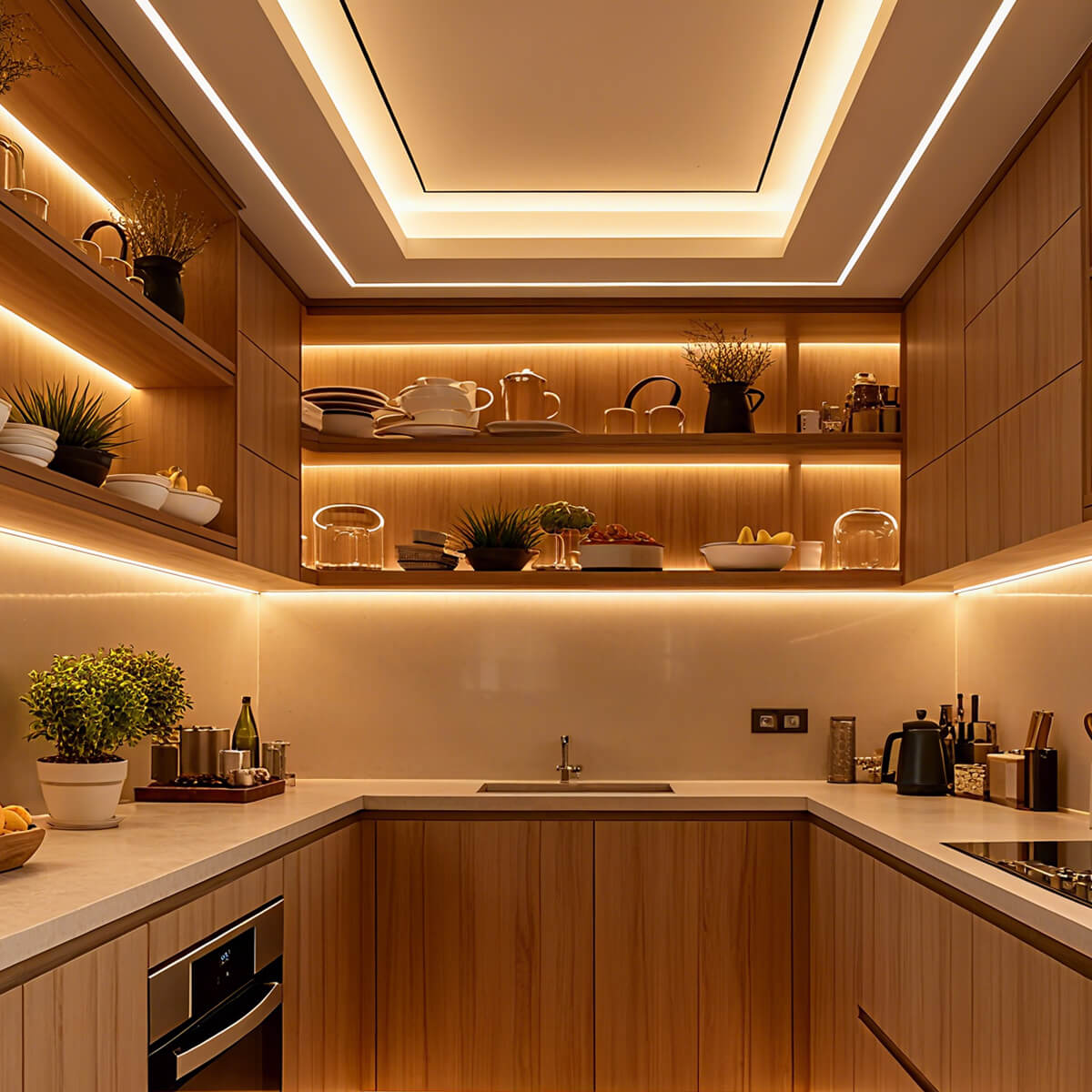
Recommended Fixture Architectures for Kitchens:
Rigid LED Linear Bars: The premier choice for high-demand work surfaces, delivering a continuous, uniform light wash with zero hot-spots.
Flexible LED Strips: Highly effective for uninterrupted perimeter runs along intricate cabinetry footprints.
LED Puck Lights: Ideal for localized accentuation inside glass-faced display cabinets.
Engineering Tip: For high-end specifications or new construction, structural linear bars offer superior thermal management and light distribution. For rapid retrofits or secondary lines, a plug-in flexible strip system reduces labor overheads.
2. Bathroom & Vanity Spaces: Diffused Ambient & Accent Lighting
Bathroom under-cabinet and under-vanity applications bypass the need for intense, piercing light. Instead, the focus shifts to creating a glare-free, high-comfort environment that promotes relaxation.
Optimal Configuration: Plug-in modules or battery-operated smart fixtures for streamlined, non-invasive installation in high-moisture zones.
Target Luminance Volume: 100 to 300 Lumens per foot, preventing ocular discomfort during nocturnal or early-morning use.
Correlated Color Temperature (CCT): 2700K to 3500K (Warm to Warm-Neutral White). This range invokes a premium, spa-like hospitality ambiance.
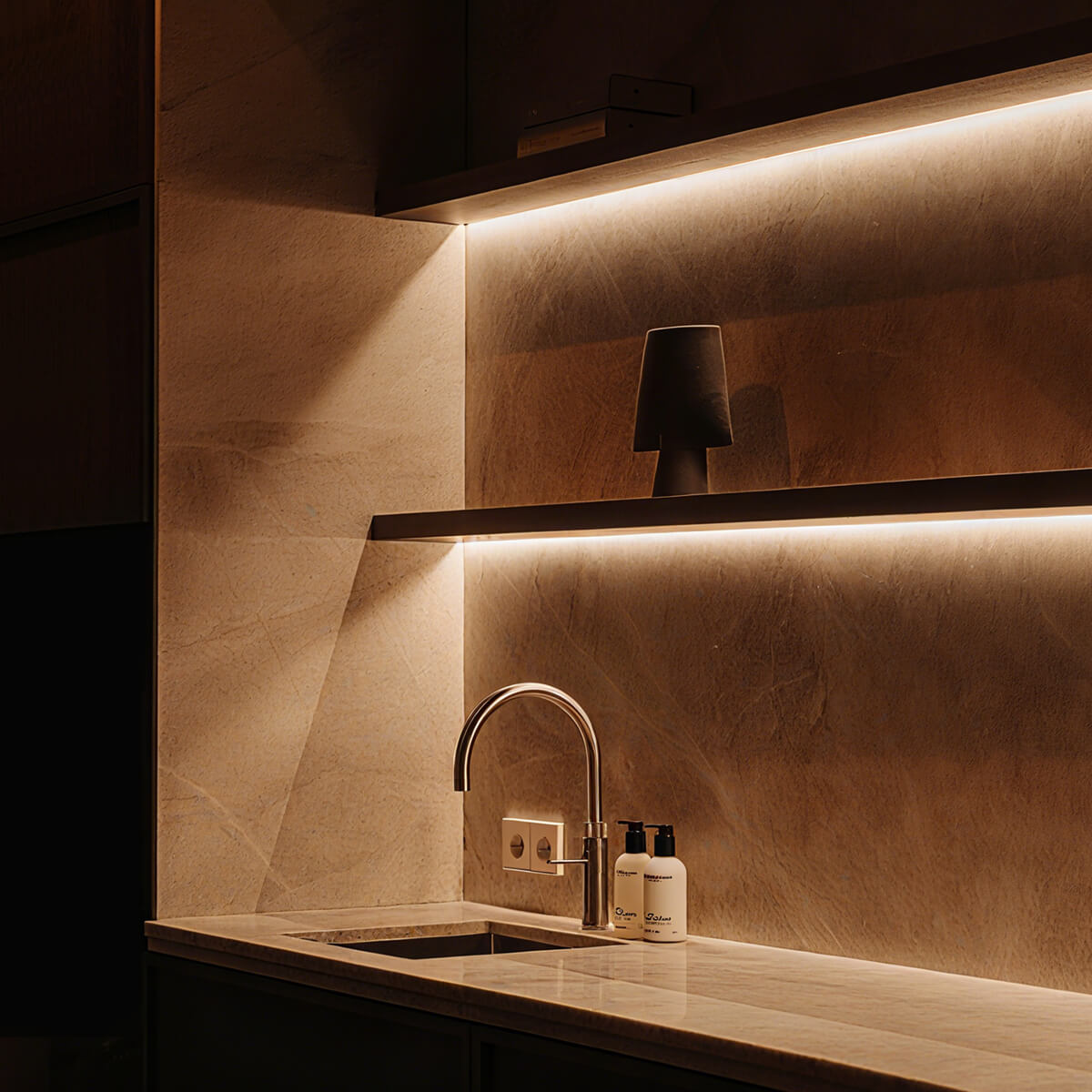
Recommended Fixture Architectures for Bathrooms:
Flexible LED Strips: Perfect for mounting beneath floating vanities or along lower kick-plates to create a sophisticated floating effect.
Battery-Powered Puck Lights: A wire-free option for localized accent lighting or quick decorative upgrades.
Design Note: To avoid a cold, clinical atmosphere, prioritize warmer spectrums ($2700\text{K} - 3500\text{K}$). However, for ultra-modern, minimalist bathroom designs featuring concrete or marble surfaces, a crisp 4000K profile may be specified.
3. Corporate Offices & Commercial Workstations: Focus-Driven Task Lighting
Productivity-focused environments demand brighter, cooler illumination spectrums engineered to mitigate eye strain, stave off fatigue, and optimize cognitive focus during extended tasks.
Optimal Configuration: Plug-in or hardwired connections to guarantee an uninterrupted, high-stability power supply.
Target Luminance Volume: 250 to 600 Lumens per foot, scalable depending on the total square footage of the primary desk surface.
Correlated Color Temperature (CCT): 4000K to 5000K (Neutral to Cool White), creating an alert, high-performance working environment.
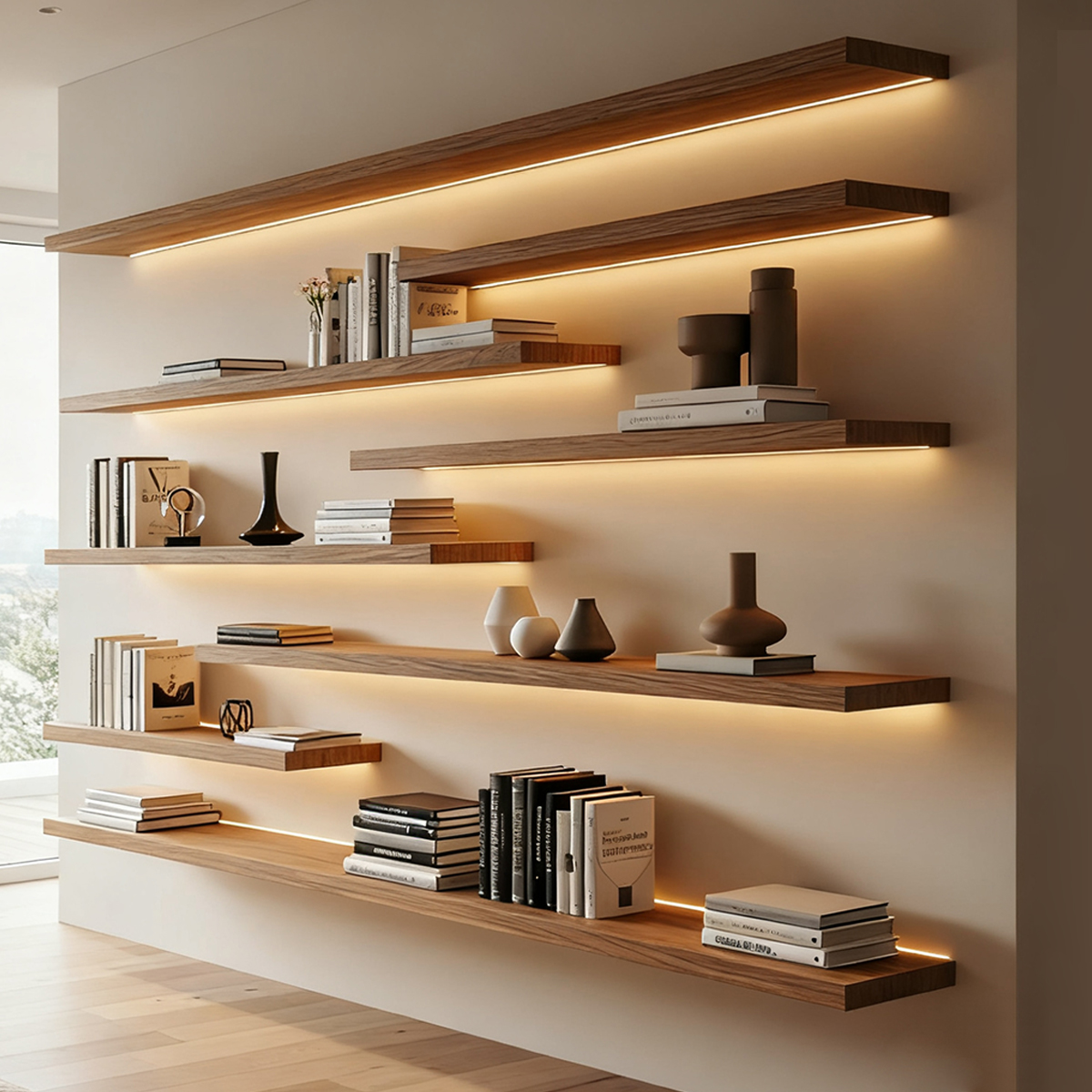
Recommended Fixture Architectures for Workspace Optimization:
Rigid LED Linear Fixtures: The industry standard for mounting beneath overhead shelving to cast an evenly distributed, glare-free light across desktops.
Dimmable LED Strip Lights: Offers excellent versatility, allowing users to manually adjust lux intensity based on current task requirements.
Ergonomic Warning: Avoid warm light profiles ($<3500\text{K}$) in professional task zones, as lower color temperatures induce relaxation and decrease mental alertness. Maintain a minimum of 4000K for active workstations.
Strategic Procurement Matrix: Quick Selection Guide
To streamline your project specification or product sourcing lifecycle, use this matrix to cross-reference structural requirements with the ideal LED hardware solution:
Elevate Your Space with High-Performance LED Solutions
Upgrading to solid-state under-cabinet LED systems is one of the most efficient, high-impact strategies to optimize both spatial utility and modern interior aesthetics. Whether you are aiming to increase safety in a residential kitchen, drive workplace performance in a corporate office, or cultivate a luxury aesthetic in a hospitality suite, there is a precision-engineered LED configuration built for your exact layout.
 Strategic Guide to Closet Lighting Design: Integrating Advanced LED Systems for Premium Cabinetry
  About us
 OUR PARTNER
 faq
faq Contact us