


 Home
HomeHow to choose the best lighting scheme to illuminate a wardrobe?
 Jun 11,2026

 SYP
SYP
System Architecture: From Isolated Fixtures to "Integrated Lighting Systems
Interface & Control: Automating the "Luxury Boutique Experience
Spatial Volume & Focus: Mastering Directional Optics
Engineering Around Constraints: The NoWire Solution
In modern highend millwork, custom closet design, and residential interior architecture, strategic Wardrobe Lighting has evolved far beyond a functional necessity—it is now a baseline benchmark for defining spatial premium texture, maximizing organizational efficiency, and driving the commercial value of bespoke cabinetry.
An underilluminated wardrobe not only forces users to struggle when differentiating dark fabrics but also fails to showcase the rich textures of luxury garments. To guide interior architects, custom furniture manufacturers (OEM/ODM), and luxury homeowners toward the most forwardthinking technical decisions, this guide breaks down system architectures, control logic, and hardware selection to engineer the perfect wardrobe illumination ecosystem.
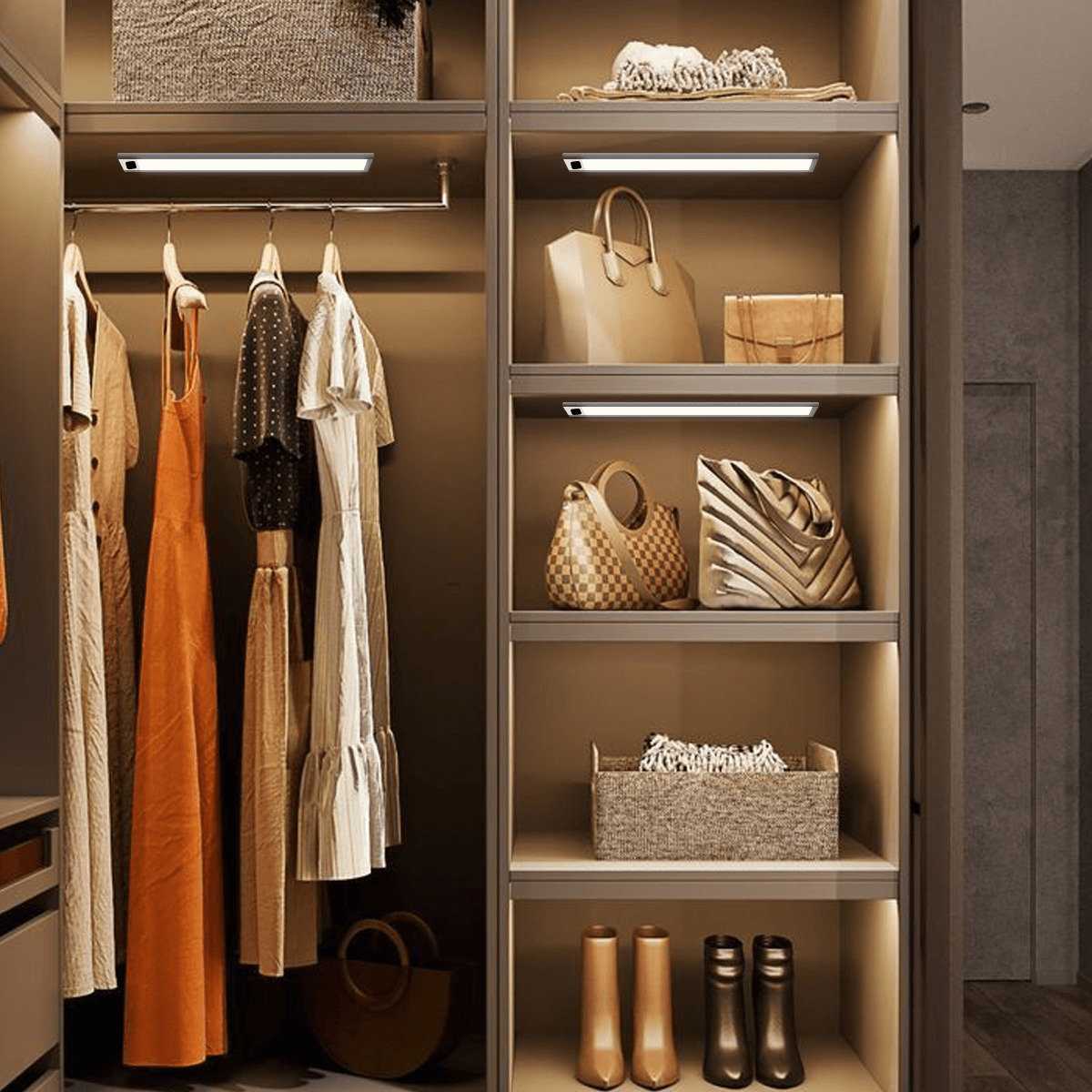
1. System Architecture: From Isolated Fixtures to "Integrated Lighting Systems"
Traditional closet design often relies on retrofitted, singlepoint fixtures. However, these surfacemounted solutions break up the clean lines of premium wood or metal paneling. To achieve a seamless, highend look, the lighting structure must be reengineered at the manufacturing level:
Integrated Lighting Systems
The Core Engineering: This method embeds or completely flushes custom aluminum profiles into prerouted grooves inside shelf boards, hanging rods, or vertical gable panels during the factory fabrication phase.
Expert Insight: This approach demands a highly integrated supply chain capable of precise CNC machining and structural wiring blueprints . By concealing all wiring paths within the cabinet joinery, it eliminates safety hazards and delivers a flawless, glarefree, "see the light, hide the fixture" visual experience.
Linear Matrix Networks: LED Strip Lights
The Core Engineering: Flexible or rigid LED strip lights are the undisputed workhorse of modern wardrobe illumination . Their true value lies in delivering continuous, highly uniform linear distribution that completely eradicates dark pockets or harsh shadows.
Application Layout: Deploying these strips horizontally beneath shelves or vertically along the closet's inner front stiles allows light to wash evenly across garments, dramatically enhancing visual depth and spatial volume.
Precision Accents: UnderCabinet Lighting & Puck Lights
The Core Engineering: For complex millwork configuration featuring builtin drawer units, island vanity counters, or smaller designated cubbies, localized directional illumination is required to craft a balanced hierarchy of light.
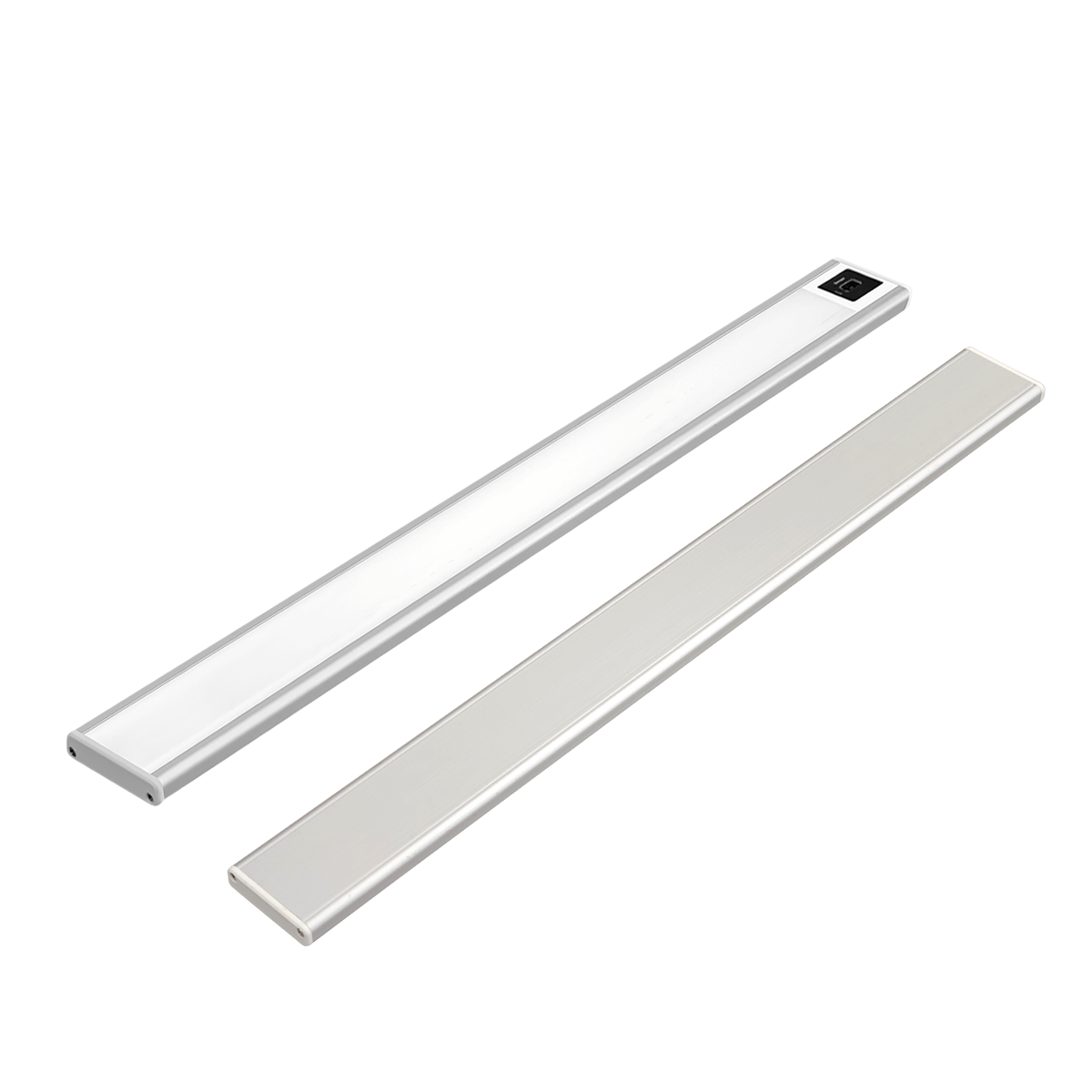
Application Layout: Concealing ultralowprofile undercabinet bars or miniature lowvoltage LED puck lights beneath floating drawer lines or interior display alcoves allows you to spotlight highvalue accessories like luxury watches, jewelry, and silk ties.
2. Interface & Control: Automating the "Luxury Boutique Experience"
The finest wardrobe lighting systems operate intuitively without friction. The sophistication of your sensor configuration directly governs the premium feel of the user interaction:
MotionActivated & Sensor Lighting
By implementing microswitches inside door hinges or flushmounting miniature infrared/radar sensors at the shelf edge, you create a seamless "door open, light on; door close, light off" automated loop . Users no longer need to grope for physical switches in the dark; every interaction with the closet becomes an elegant, choreographed visual event.
Dynamic Tuning: Dimmable Wardrobe Lighting
Static, singleintensity outputs cannot adapt to the human eye's natural circadian rhythms . Implementing dimmable architectures powered by PulseWidth Modulation (PWM) drivers enables intelligent spatial transitions :
Daytime Mode: Floods the closet with highoutput, highCRI light to support rapid coordination, accurate color evaluation, and styling .
Nocturnal Mode: When accessed late at night or early in the morning, the system softstarts at a muted brightness level, providing adequate visibility without causing glare or visual shock .
3. Spatial Volume & Focus: Mastering Directional Optics
Bespoke Wardrobe Lighting leverages optical physics to modify spatial perception. If a layout suffers from tight footprints or awkward structural dimensions, strategic optical direction can shift the entire atmosphere :
Targeted Focus via Adjustable Spotlights
For spacious walkin closets, installing adjustable gimbals or miniaturized track spotlights at the ceiling perimeter or upper structural fascias yields theatergrade framing . This allows designers to pivot beam angles and focus light dynamically as seasonal collections shift, mirroring a luxury fashion showroom.
Eliminating the "Dark Fabric Blind Spot"A frequent realworld pain point for endusers is the inability to distinguish between deep navy blue, charcoal gray, and true black garments in dim environments . Specifying high colorrendering (CRI $\ge$ 90) directional optics accurately renders fabric dye undertones, textures, and fine weaving patterns, blending ultimate utility with elevated aesthetic design .
4. Engineering Around Constraints: The NoWire Solution
In retrofit projects, historical renovations, or scenarios where structural concrete prevents 12V/24V driver wiring, routing hardwired lines into a finished closet carries immense labor costs and disruption risks .
The Alternative Protocol: BatteryPowered LED Lights
FieldTested Practice: For offgrid wardrobe zones, specify lowpower consumption, highcapacity lithiumion rechargeable magnetic light bars.
Hardware Benchmarks: Prioritize modules designed with integrated neodymium magnetic backings and universal USB TypeC fastcharging ports . This framework bypasses complex conduit drilling entirely and allows rapid, toolfree migration, making it an excellent asset for immediate "lightrenovation" value additions .
Conclusion: System Specification Decision Matrix
Selecting the definitive Wardrobe Lighting profile is an intentional balancing act weighing spatial scale, millwork geometry, garment types, and overarching architectural design
As an industry standard, always specify highefficacy, longlifespan LED engines . Beyond mitigating energy overhead and reducing longterm maintenance cycles, coolrunning LEDs guarantee that continuous illumination within enclosed cabinetry will never create thermal traps, shielding delicate textiles, fine silks, and natural leathers from heatinduced fiber degradation .
 Plaster-In Recessed LED Aluminum Profiles: The Ultimate Architectural Guide for Seamless Linear Lighting
  About us
 OUR PARTNER
 faq
faq Contact us