



 Home
HomeSimplify Your Lights. The Solderless Secret
 Nov 07,2025

 SYP
SYP
In home decoration, store lighting or atmosphere creation, LED light strips are highly favored for their flexibility, energy efficiency and soft light. However, when traditional LED light strips are installed and spliced, the technical work of welding is often indispensable. This deters many ordinary users with weak hands-on skills. Nowadays, the emergence of solder-free LED light strips has completely revolutionized the installation experience, making lighting up Spaces as simple as building with blocks. So, what exactly is its principle? Today, let's find out.
Core concept: Simplify complexity, from "welding" to "joining"
Solder-free LED light strips, as the name suggests, achieve the splicing, extension and branching of light strips through dedicated quick couplings or connectors, completely discarding the traditional soldering process. The core principle lies in using a precise physical connection structure to replace the manual welding of metal fusion, thereby achieving safe and stable circuit conduction.
Connection method: Exquisite physical conduction art
The essence of the solder-free technology lies entirely in its diverse and efficient connection methods. Their common feature is that they do not require tools or only need simple tools, and can be completed by physical pressing or plugging.
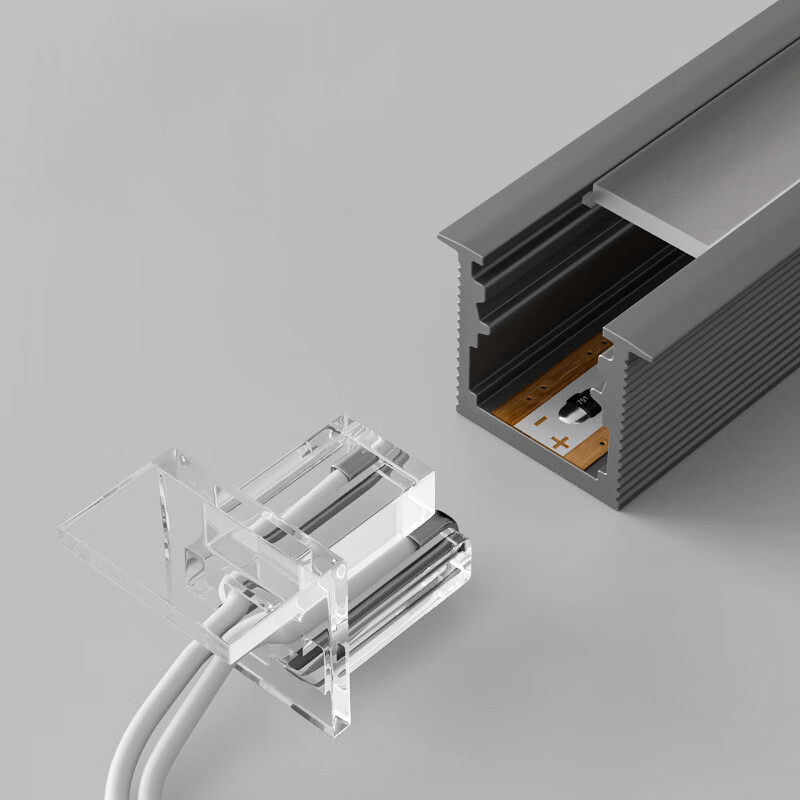
Metal contact connection
This is the most common way. At the end of the light strip, there are exposed and neatly arranged solder pads (metal contacts) designed. Inside the corresponding quick connector, there is a precisely matched metal probe. When we insert the light strip into the connector, the internal probe will precisely press against the contacts of the light strip. Under the structural pressure of the external snap or lock, a tight physical connection is formed to ensure the stable transmission of current.
Elastic snap-on structure
This structure further simplifies the installation. The connector itself is a clasp with a "cover", and there is a pre-installed conductive metal sheet inside. When installing, simply place the light strip into the base, make sure its contacts are aligned with the metal sheet, then press down the cover and fasten it tightly. The powerful pressure generated by the snap will force the metal sheet to closely combine with the contact points of the light strip, forming a firm electrical connection and physical fixation.
Application example
For instance, when installing COB light strips and turning is required, the dedicated welding-free corner joints play a significant role. Its interior is at a 90-degree right Angle, with metal contacts at both ends. Just insert the two sections of the light strips that need to be turned into the ends of the connector respectively. The internal contacts will precisely connect with the light strips, and the current can stably bypass the corner, achieving a seamless light effect connection.
Voltage characteristics: Flexible selection for different scenarios
Understanding the voltage characteristics of the solder-free light strip is crucial for correct installation and use. The mainstream solder-free light strips on the market are mainly divided into two voltage types:
High-voltage 220V light strip
Features: This type of light strip is designed to be directly connected to the household standard circuit (220V AC power), without the need for additional transformers or drivers.
Advantages: It is extremely easy to install and is highly suitable for long-distance and large-area lighting scenarios, as high-voltage transmission can effectively reduce current loss on long wires.
Note: Due to the high working voltage, it is essential to ensure that the power is off during installation and splicing, and to take good insulation protection measures at all connection points to guarantee safety.
Low-voltage DC12V/24V light strips
Features: This type of light strip needs to be used in conjunction with a dedicated LED driver (power adapter) to convert household 220V AC power into a safe DC low voltage.
Advantages: Safe voltage, risk-free touch, especially suitable for places that require close contact such as cabinets, desks, and children's rooms. Meanwhile, its dimming performance is usually better.
Connectors: Low-voltage solder-free light strips usually require dedicated connectors to match them. These connectors also adopt a push-pull or plug-and-pull design in structure, but the internal structure is optimized according to voltage and current to ensure stable connection.
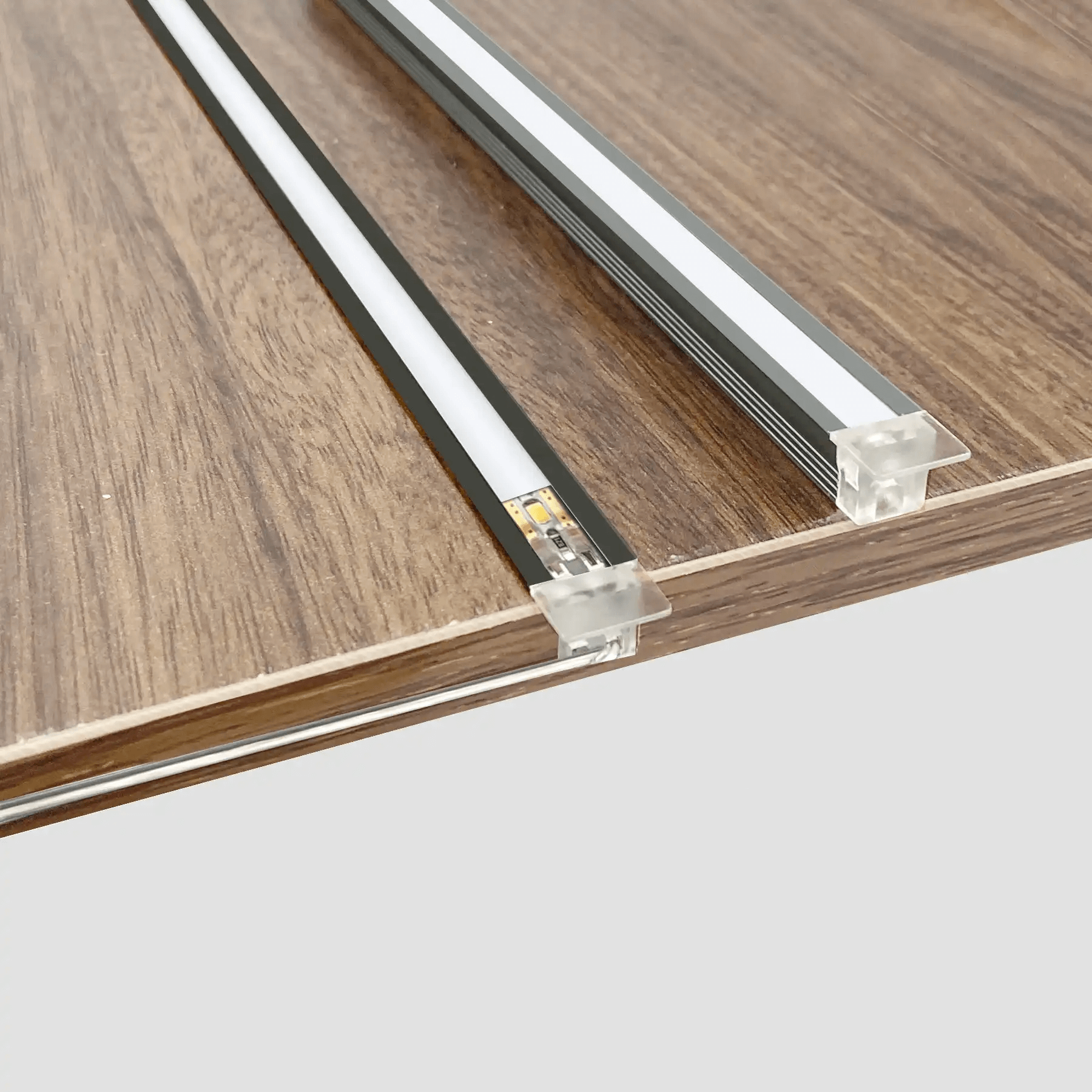
Why choose solder-free LED light strips?
Minimalist installation: No professional welding skills are required. Even ordinary users can easily complete the installation and modification, significantly lowering the DIY threshold.
Safe and reliable: The dedicated connector provides a standardized connection, avoiding problems such as false soldering and false soldering that are prone to occur in traditional soldering, and ensuring more stable contact.
Flexible and convenient: It can be disassembled, reassembled or extended at any time, facilitating later maintenance and adjustment of the lighting layout, with a high reuse rate.
Aesthetically pleasing and tidy: The connection points are compact and standardized, making the entire light strip installation effect look more beautiful and professional.
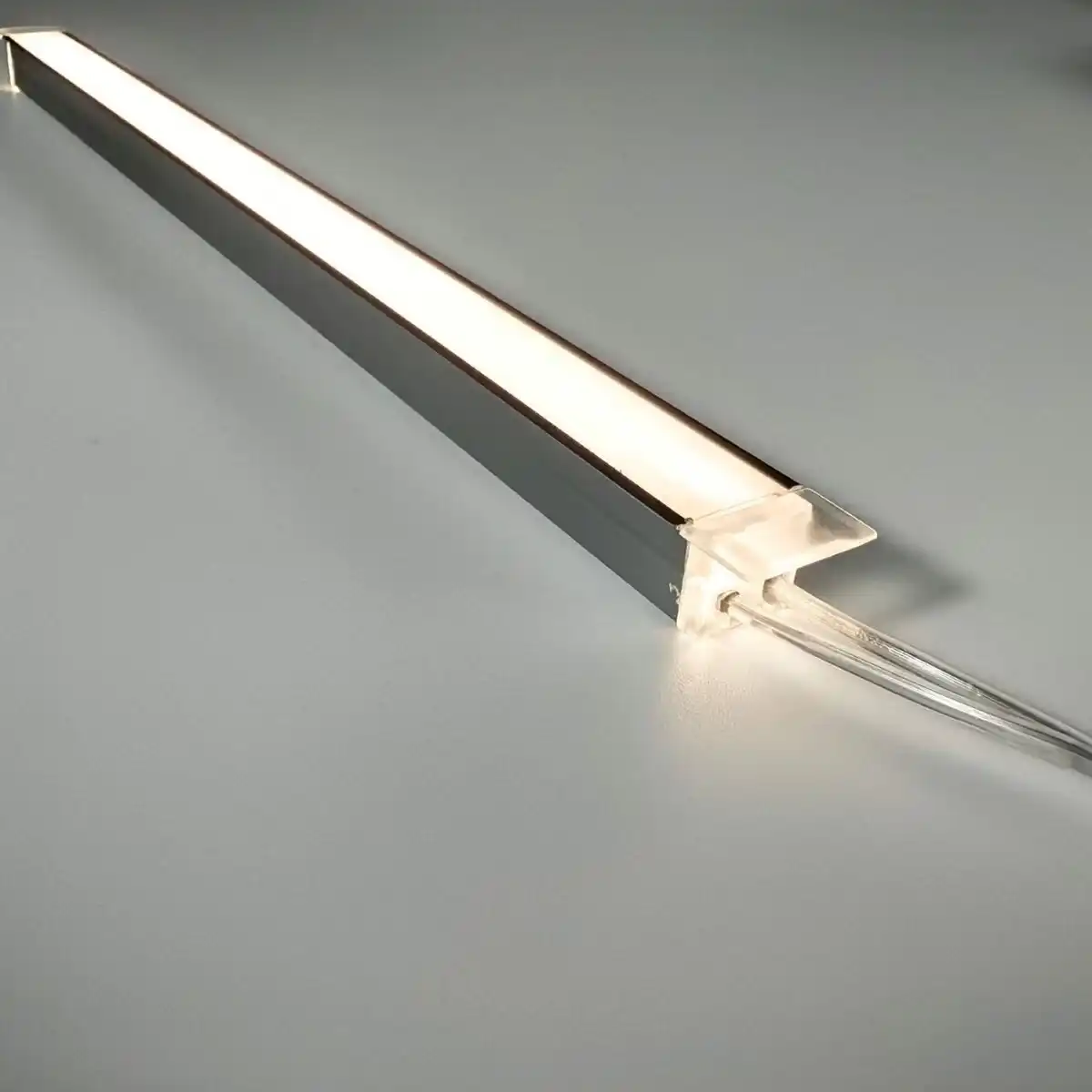
In conclusion, the solder-free LED light strips perfectly combine convenience and safety through their ingenious physical connection structure and clear voltage adaptation scheme. It is not merely a technological innovation, but also an upgrade of a lifestyle concept - making technology truly serve people and easily illuminate your creative space.
 Best Under Cabinet Kitchen Lights 2026 LED Strips Puck Lights Guide
  About us
 OUR PARTNER
 faq
faq Contact us